
Bernedoodle Colors
Merle Bernedoodles
Merle Bernedoodles available now, and everything about the color.
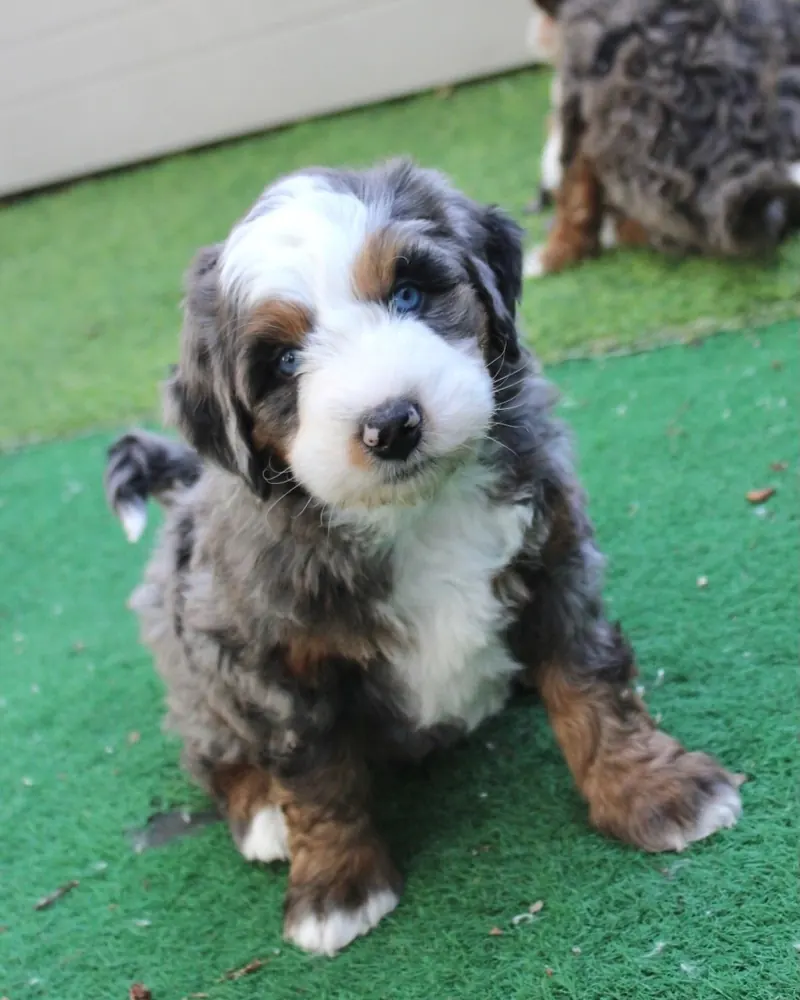
A merle Bernedoodle has a marbled coat, soft patches of lighter color scattered over a deeper base. The one most people know is the blue merle, a black dog whose patches turn a silvery gray-blue, alongside its cousin the chocolate merle on a brown base.
Merle is a popular color, and it is also the one we take the most care explaining. The pattern comes from a single gene that carries real health risk when it is doubled, so it is worth understanding before you fall for the look.
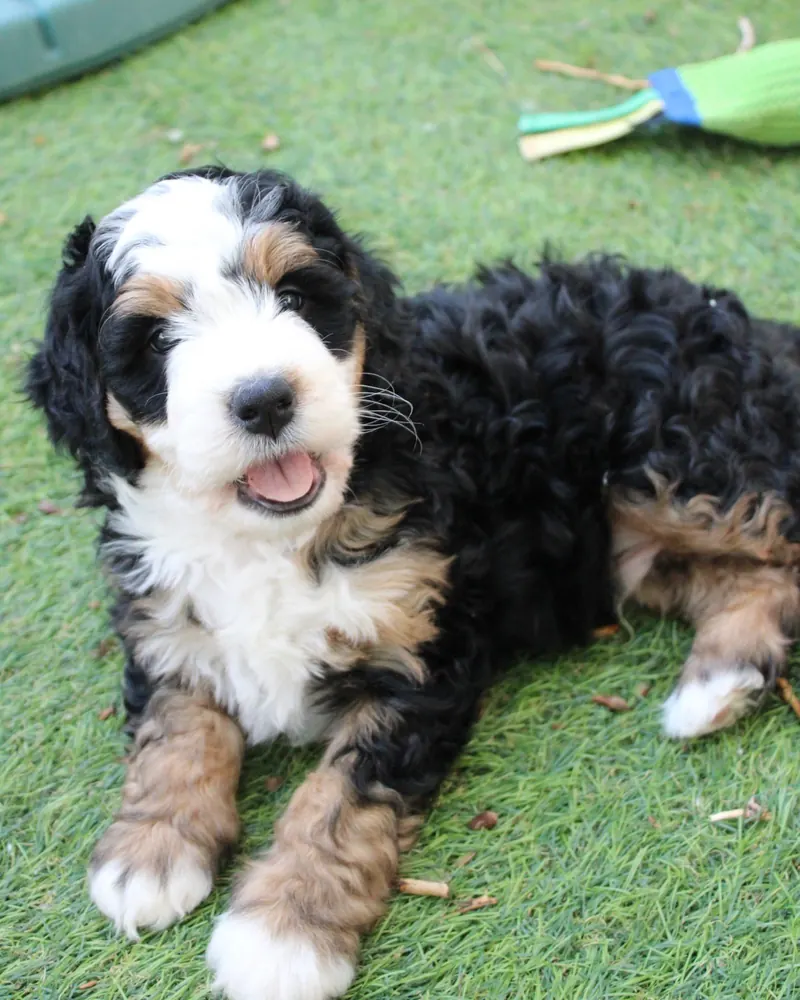
Merle Bernedoodles Available Now
What a merle coat actually is
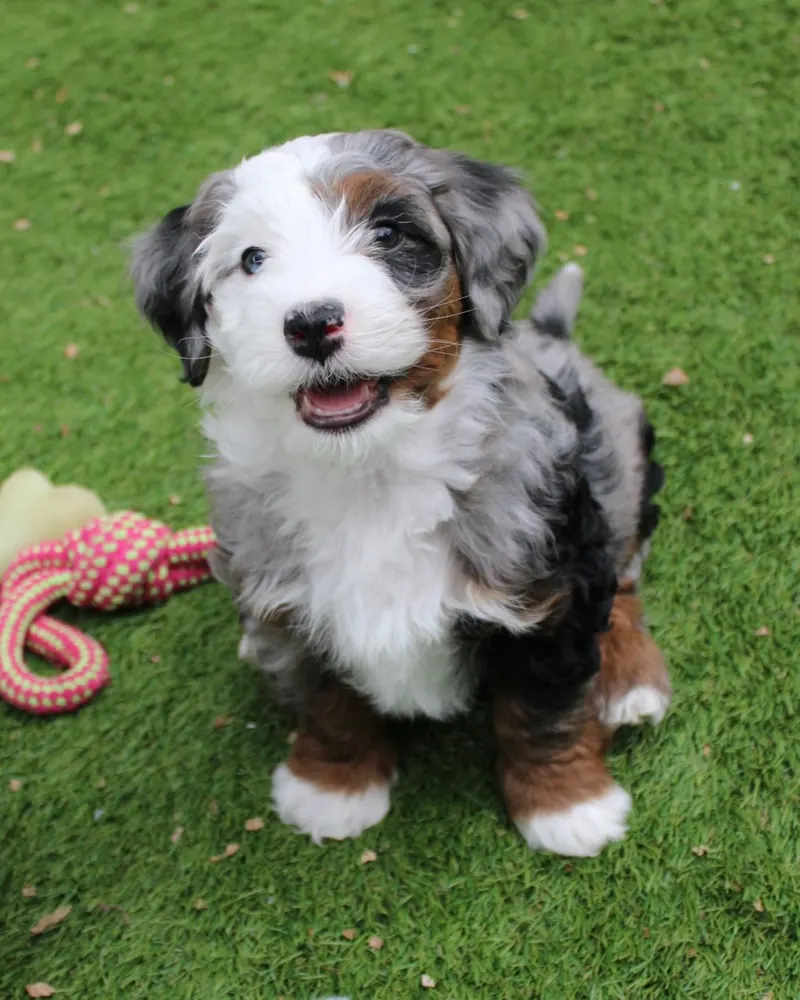
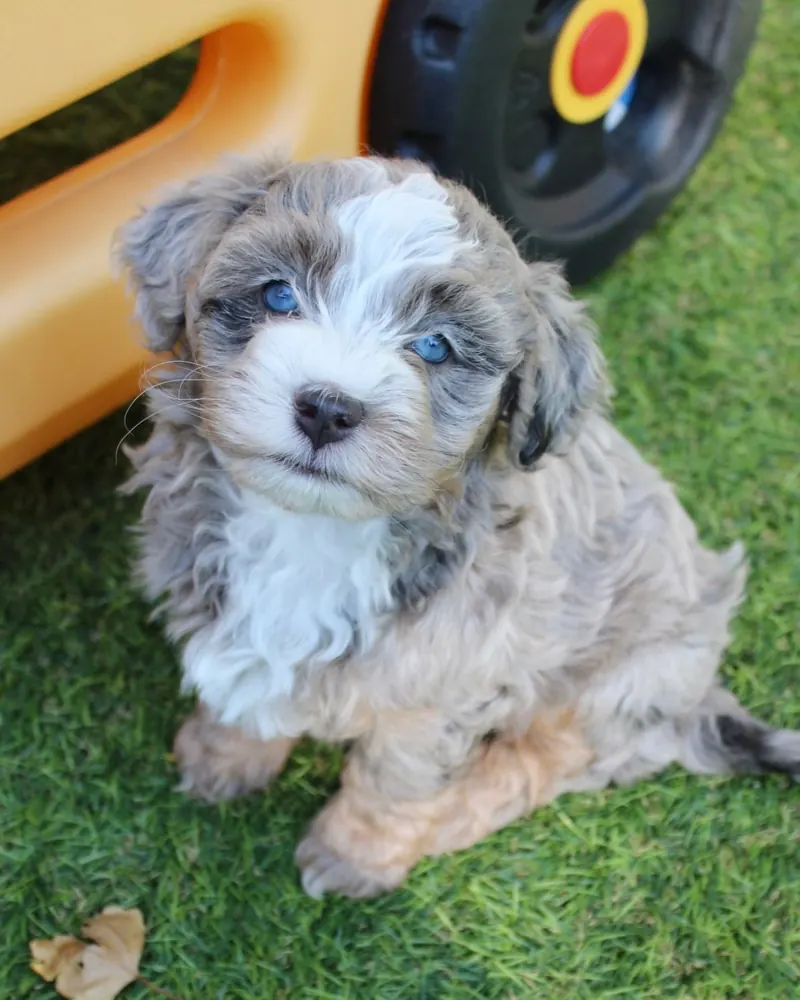
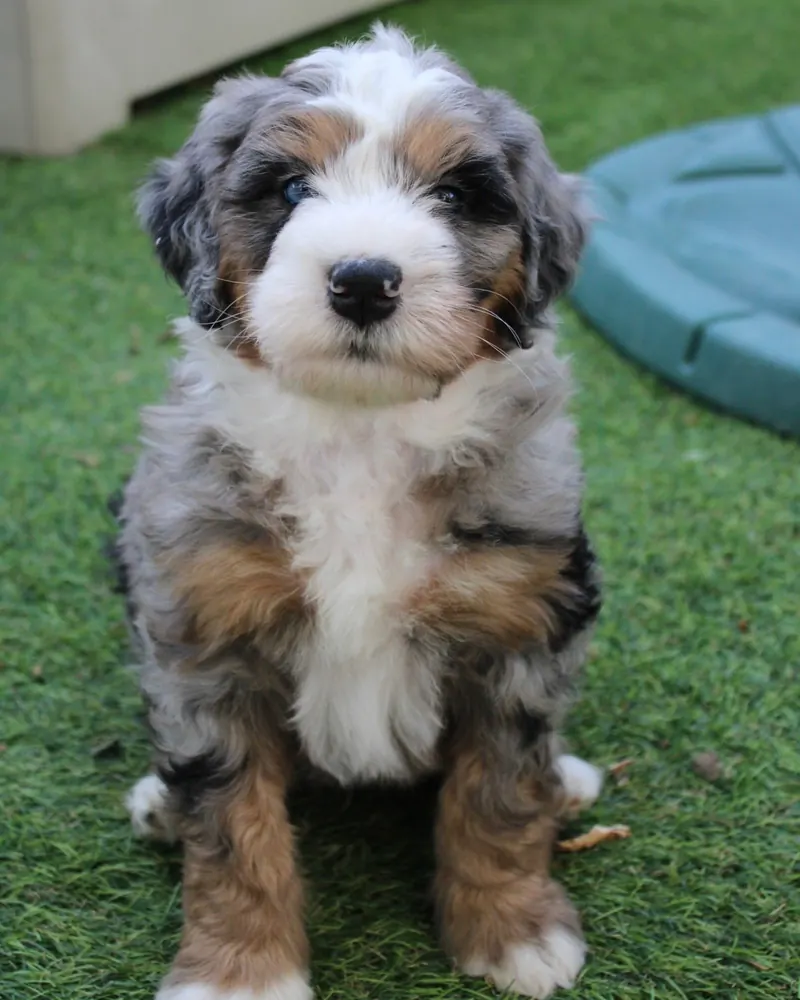
Merle dilutes color in random patches and leaves the rest of the coat at full strength, so you get a mottled, smoky effect rather than clean stripes or spots. Eyes can be brown, blue, or one of each, and the nose and paw pads can come speckled pink and dark.
The base underneath sets the name. Black gives a blue merle. Brown gives a chocolate merle, sometimes called brown merle or liver merle. Merle can also join other patterns, so there are phantom merles and tri-color merles. See the tri-color page for that layout.
The same pattern looks different from coat to coat. A short clip shows the patches clearly, while long hair blends them into a smoky wash.
Where the merle gene comes from
Merle runs off a single gene, and one copy is enough to show the pattern, which geneticists call incompletely dominant. Here is the thing: Bernese Mountain Dogs are not a merle breed, and merle is not a recognized historic Poodle color either.
So a merle Bernedoodle has the gene because a merle dog entered the pedigree, which is the reason the pattern is an add-on rather than part of either parent breed. A DNA test for the merle gene is available from labs such as the UC Davis Veterinary Genetics Laboratory.
The test looks for the merle insertion, and some labs can report its length, which helps tell classic merle from the hidden forms.
Why merle is never bred to merle
A puppy that inherits the merle gene from both parents is a double merle, and double merles are associated with deafness and with eye problems, from small or malformed eyes through to blindness. Studies in other breeds have found hearing loss in a higher share of double merles than single merles, and no figure has been measured for Bernedoodles.
The standard advice is clear: never breed two merles together. A single copy gives the normal merle look, and the risk comes from doubling it.
The inner ear depends on pigment to work normally, which is why a lack of it in a double merle can affect hearing as well as the eyes.
Does merle fade with age?
The merle gene itself does not fade. The base coat under it can lighten the way any black coat does, drifting toward gray or silver, which can leave the patches standing out less. Puppy coat also gives way to adult coat, so the pattern can read differently at a year than it did at eight weeks.
Formal studies of merle Bernedoodles are thin, so treat reports of dramatic change as owner observations. A puppy photo is a fair starting point and not a final answer.
Pay attention to the eyes and nose as well as the coat. Pigment in those areas can be patchy or pink on a merle, and a vet can check that the eyes look healthy and that the puppy responds to sound. These simple checks say more than any color photo.
How big does a merle get?
Merle does nothing to size. Merles come in every size from micro to standard, and the full grown chart lists weights by size. The mini Bernedoodle page covers the mid-sized option.
A merle's coat type is also independent of the pattern. Straight, wavy and curly coats all occur with merle, and the pattern shows differently in each, which is why the same dog can look more or less spotted after a haircut. See the grooming guide for what a trim does.
Does merle change the temperament?
No study has tied merle to temperament in Bernedoodles. Hearing and sight are the parts that matter, and a single-copy merle is simply a normal dog carrying a coat pattern. The temperament guide walks through what to expect.
It helps to separate the two ideas people mix up. Merle is a coat pattern, and the health concern attaches to a double dose of the gene, not to a single copy. A single-copy merle puppy has one merle parent and one non-merle parent, which is how the pattern is meant to be produced. Every merle puppy from Aka’s Bernedoodles is bred this way.
Where to see our merle puppies
Our available puppies are listed with photos, and the colors hub lets you compare every pattern side by side.
Merle Bernedoodle Questions
01Can a Bernedoodle be merle?
Yes, if a merle dog is in the pedigree. Neither the Bernese nor the traditional Poodle carries merle on its own.
02What is a blue merle Bernedoodle?
A merle on a black base. The black dilutes to silver-gray patches on dark. The eyes are often blue or partly blue.
03Are your merle puppies double merles?
No. Each of our merle puppies has one merle parent and one non-merle parent, so none of them is a double merle.
04Is a double merle Bernedoodle sick?
Double merles carry a higher risk of deafness and eye defects. Many are still loved pets, but responsible pairing avoids producing them.
05How do you test for merle?
A DNA test for the merle gene, offered by labs including the UC Davis Veterinary Genetics Laboratory, can find the gene even when the coat does not show it.
06Do merle Bernedoodles have blue eyes?
Often, but not always. Blue or partly blue eyes are common with merle and can be a hint, but other genes also cause blue eyes, and a merle can have brown eyes.
07Is chocolate merle the same as liver merle?
Yes. Both describe merle on a brown base.
The Other Bernedoodle Colors
When You Are Ready
Would You Like a Merle Bernedoodle?
Send us a message with the puppy's name, or ask us anything first.