
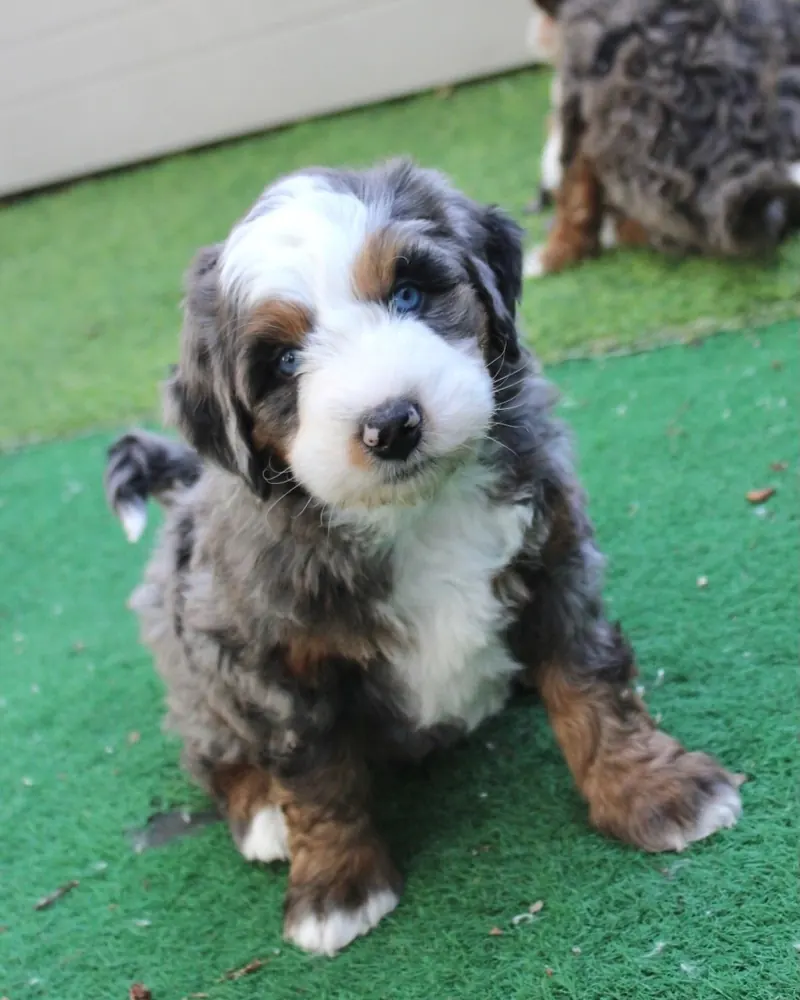
Bernedoodle Guide
Do Bernedoodles Shed?
Aka’s Bernedoodles, Akron, Ohio. Updated 28 October 2026.
Some do, some barely do. We raise these dogs, so we will give you the straight version: the cross mixes a heavy-shedding Bernese Mountain Dog with a Poodle that keeps most of its loose hair in the coat, and no one can promise which parent a given puppy will take after here.
What we can do is help you read the odds. On this page we start with the "hypoallergenic" label, because that is the part most people get sold a line on, and then we work through the coat type, the furnishings gene and the generation that actually move shedding one way or the other.
Are Bernedoodles hypoallergenic?
We will lead with the honest answer: no dog is fully hypoallergenic, and the Bernedoodle is no exception. The main dog allergen, called Can f 1, is a protein that comes from saliva, skin and dander, not just from hair, and every dog makes it. A 2011 study of dust in 173 homes with dogs of about 60 breeds found no lower allergen level in homes with the breeds marketed as hypoallergenic, including poodle types. A follow-up study of coat samples even found some low-shedding breeds with high allergen levels.
That does not mean everyone reacts the same way. Allergy symptoms also come from other sources, including pollen carried in on the coat and dust in the home, which a clean-living routine can reduce. Some people with allergies do better with a given dog, and some Bernedoodles seem easier on sensitive owners, probably because less loose hair and dander drift around the house. But the effect varies from dog to dog, and we would never promise it. If anyone in your family has asthma or serious allergies, talk to an allergist and spend real time with the actual dog or its parents before you commit.
So how much does a Bernedoodle really shed?
Compared with a Bernese, usually not much, though "much" is a matter of opinion. The Bernese Mountain Dog has a thick double coat that sheds all year and in heavy seasonal bursts, and owners know the feeling of finding black and white hair on every surface. A Poodle has a single dense coat of continuously growing hair that tends to remain in the coat until it is brushed out or clipped.
A Bernedoodle falls somewhere between the two. A well-curled, Poodle-leaning dog may shed very little in the house. A looser-coated dog can leave a visible amount of hair on floors and furniture. Think of it as a spectrum from light to moderate, with a small number of dogs on either end. Size changes how much hair there is to find: a standard drops far more hair in total than a toy does, even when the coat type is the same. Color has no known effect on shedding.
Does the coat type change how much they shed?
It does, on average. Coat type is one of the best visual clues we have, though not a perfect one:
| Coat | What it looks like | Typical shedding |
|---|---|---|
| Straight | Flat, silky or shaggy, closer to the Bernese coat | Moderate to heavy |
| Wavy | Loose waves, soft and flowing | Light to moderate |
| Curly | Tight curls, dense and woolly | Light, but more matting |
A curly coat holds loose hair inside the curls, so it seems to shed less, but that trapped hair forms mats unless you brush it out. A straight coat releases hair onto the floor, which is easier to see but easier to keep tidy with a good brush and vacuum. Wavy coats sit in the middle, and most Bernedoodles fall here. If you are unsure which a puppy will grow into, look at the parents and at older dogs from the same breeding, because puppy coats change a lot. The guide to Bernedoodle colors also shows how coats and patterns look in the adult dog.
Furnished or unfurnished: why it matters for shedding
"Furnishings" are the longer hair on the muzzle, eyebrows and beard, typical of Poodles and other wire or curly breeds. Furnishings come from a single gene, studied in dogs in a 2009 genetics paper, and the variant that causes them is dominant, meaning one copy is enough. A dog that lacks furnishings is called unfurnished, and it has a short, smooth face with no beard or eyebrows.
Unfurnished Bernedoodles tend to shed more than furnished ones, and their coats are often flatter and closer to the Bernese. A first cross usually inherits one furnishings copy from the Poodle, so the unfurnished look is more likely to show up in later generations where both parents carry the plain variant. Commercial DNA tests can check the furnishings gene, which is how we can tell you in advance. The effect on shedding in Bernedoodles specifically has not been measured in large studies, so treat it as a strong tendency reported by breeders rather than a proven rule.
Does shedding depend on the generation?
The more Poodle in the pedigree, the more the odds lean toward a low-shedding coat. In general terms:
- F1: half Bernese, half Poodle. Shedding is typically light to moderate and the least predictable.
- F1b and F2b: backcrossed to the Poodle. Usually curlier, with less shedding.
- F1bb: the most Poodle-like, often the lowest shedding.
- Multigen: varies with the lines, but can be consistent in well-bred groups.
These are tendencies, not guarantees, and littermates can differ. The guide to Bernedoodle generations explains each label in detail.
Do mini Bernedoodles shed less than standards?
Not because of size. Shedding follows coat type and genetics, not height. A mini with a loose, straight coat can shed more than a standard with a curly one. The smaller dog does leave less hair in total simply because there is less dog, which can feel like less shedding in a small home.
When comparing sizes, look at the coat on the parents rather than at the size label. The guide to how big Bernedoodles get explains the size categories.
Why is our puppy suddenly shedding and matting?
That is the coat change, and it surprises many owners. Puppies are born with a soft puppy coat, and somewhere between about 6 and 12 months it starts to change into the adult coat. Hair may seem to come out in clumps, or the coat may suddenly tangle, thicken, curl or lighten in color. This is also when matting is at its worst, because the old and new coats weave together.
Brushing daily through the change makes a big difference. The Bernedoodle grooming guide walks through the routine for that period.
What keeps the hair and dander down?
A few habits make life easier, whatever the coat:
- Brush down to the skin several times a week, and daily during any coat change.
- Bathe every few weeks with a gentle dog shampoo and dry the coat fully.
- Keep the dog's bedding washed and use a vacuum with a good filter.
- Keep the dog out of the bedroom if anyone has allergies.
- Feed a complete diet. Dull, flaky skin can make shedding and dander worse, and your vet can rule out skin problems.
Shedding that suddenly increases, with itching, bald spots or a greasy smell, is worth a vet visit. Poodles and some crosses can develop skin conditions such as sebaceous adenitis, which a vet can identify.
How do you pick a puppy if low shedding is the priority?
Look at the adults, not just the label. Ask to see photos or video of both parents' coats, and ask how our earlier puppies have turned out. A curlier, furnished F1b or multigen is what we would point you toward, while an unfurnished or straight-coated puppy is more likely to shed.
You can browse the puppies available at Aka’s Bernedoodles on the available puppies page. If you want to understand the cross first, start with what a Bernedoodle is.
Quick Answers
01Do F1 Bernedoodles shed?
Often a little to a moderate amount. An F1 is half Bernese, so shedding is less predictable than in backcrossed dogs, and some F1 puppies shed noticeably.
02Is a Bernedoodle good for allergy sufferers?
Some people with mild allergies do well with a Bernedoodle, but there is no guarantee, since all dogs produce allergens. Time with the dog and advice from an allergist are the safest tests.
03What is an unfurnished Bernedoodle?
It is a dog without the longer beard and eyebrow hair that Poodles carry. The coat is usually flatter and sheds more than a furnished coat.
04Why does my Bernedoodle shed more than expected?
The coat may be more Bernese than Poodle, the puppy may be changing coats, or the dog may be unfurnished. Skin problems and poor diet can add to it, so check with your vet if shedding is heavy.
05Does brushing reduce shedding?
It does not stop it, but it pulls loose hair out before it lands on the floor and prevents mats in curly coats. Regular brushing is the most useful habit.
06Do Bernedoodles shed more in some seasons?
Looser-coated dogs can shed more in spring and fall, like a Bernese does. Curly dogs usually show less of a seasonal pattern.
Bernedoodle Puppies Available Now
Keep Reading
Bernedoodle Generations: F1, F1b, F2 and MultigenWe break down F1, F1b, F1bb, F2, F2b and multigen Bernedoodles: what each label really means, how it shapes coat and...Read the guide
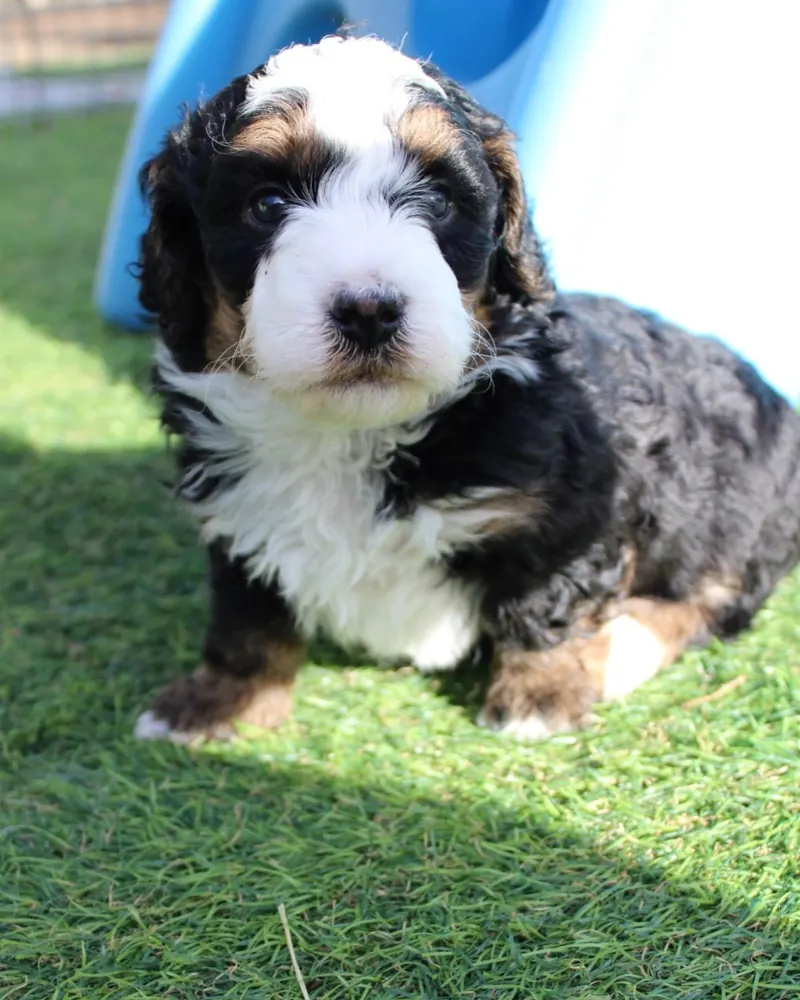 Bernedoodle Grooming GuideOur Bernedoodle grooming guide: the teddy bear cut and other haircuts, how to line brush and beat mats, bathing, ear care...Read the guide
What Is a Bernedoodle?A Bernedoodle is a Bernese Mountain Dog crossed with a Poodle.Read the guide
Bernedoodle Health Problems and Health IssuesThe Bernedoodle health issues worth knowing, from hip dysplasia and cancer to eye and skin problems, the tests that...Read the guide
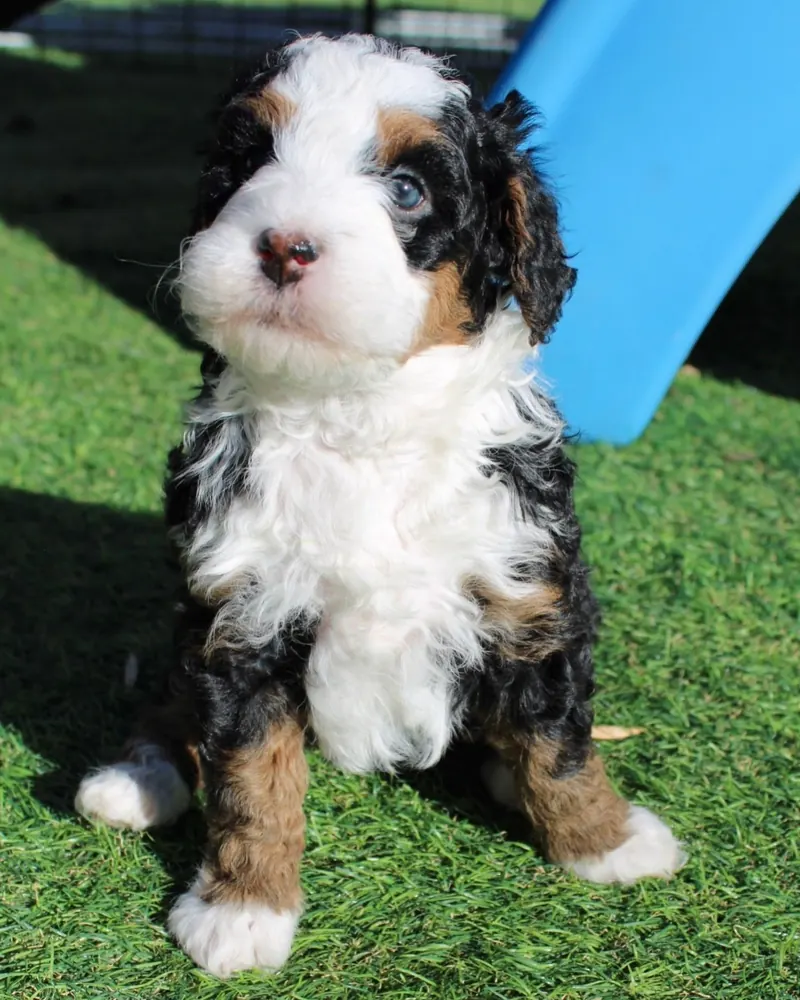 Bernedoodle ColorsTri-color, merle and the restSee the colors
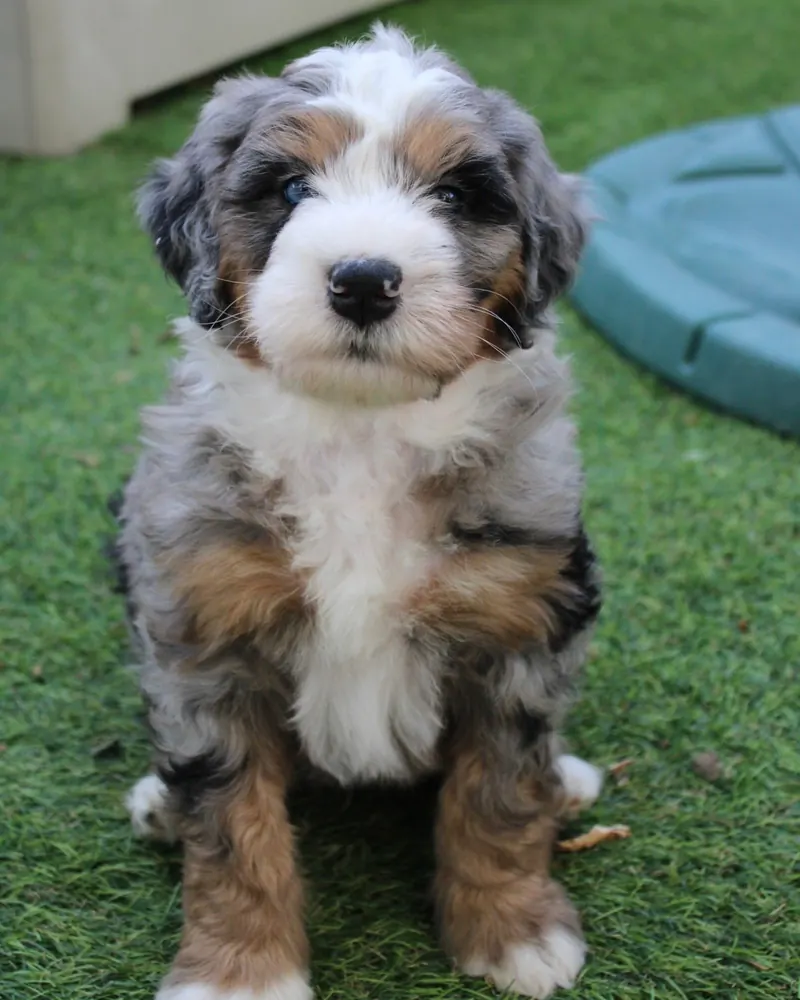 Bernedoodle Temperament and PersonalityWe raise Bernedoodles, so here is the honest version of the temperament: energy, brains, barking, training, kids, other...Read the guide
When You Are Ready
Thinking About a Bernedoodle Puppy?
See the puppies available now, or ask us anything about the breed.