
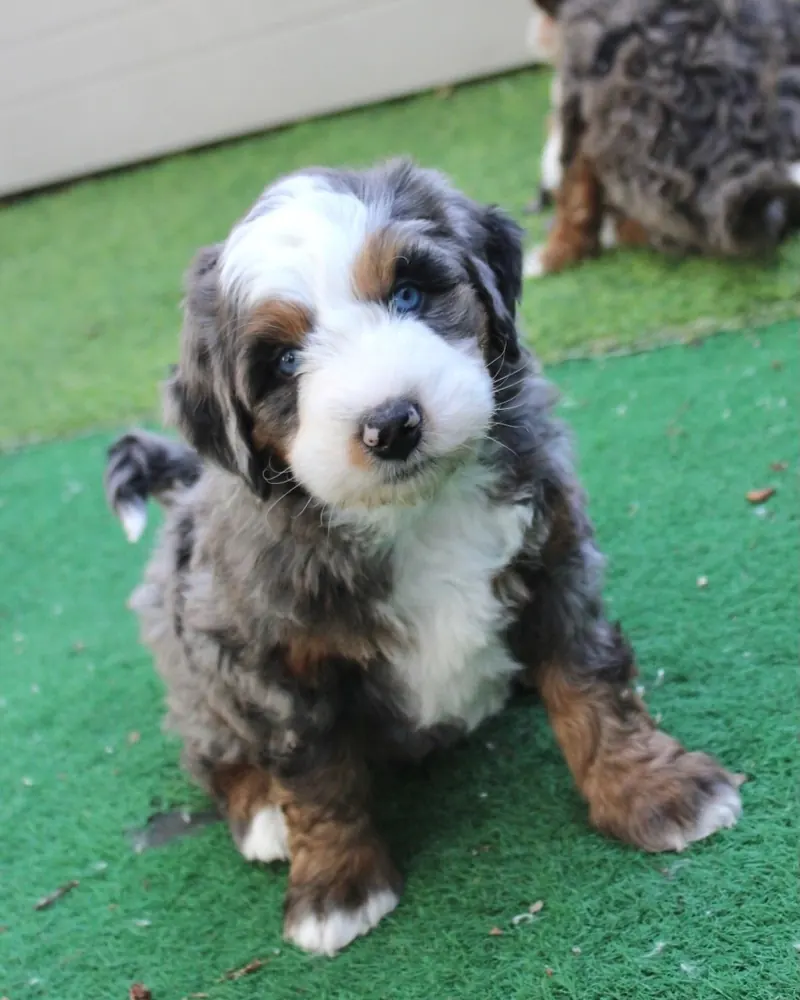
Bernedoodle Guide
What Is a Bernedoodle?
Aka’s Bernedoodles, Akron, Ohio. Updated 28 October 2026.
The short version first: a Bernedoodle is what you get when you cross a Bernese Mountain Dog with a Poodle. Most people come to the cross wanting the Bernese nature in a dog that sheds less and, they hope, lives a little longer. It is a crossbreed, not a breed with a rulebook, so no two come out exactly alike.
We raise them, so the rest of this reads the way we would explain it to you on the phone: where the dog comes from, what each parent hands down, how the size and generation labels work, and what one is really like to live with. Where something is a breeder habit rather than a hard rule, we say so.
Where the name comes from
"Berner" is the nickname for the Bernese Mountain Dog, and "doodle" is the word that stuck to Poodle crosses. Put them together and you have the dog. You will also see it written as a Bernese Mountain Poodle, a Bernese Poodle cross or a Bernese Mountain Dog and Poodle mix, and spelled a dozen ways: bernadoodle, bernidoodle, burnadoodle. They all mean the same dog.
One honest thing to get out of the way: because it is a cross, the American Kennel Club does not recognize it as a breed. A few designer-dog registries list it, but there is no official standard fixing height, weight, coat or color. So everything you read about "the Bernedoodle," this page included, is a typical range, not a promise. Individual dogs land outside it all the time.
What each parent hands down
You are really bringing home a blend of two very different dogs, so it helps to know who sits on each side of the family.
The Bernese Mountain Dog is a large Swiss farm dog, one of the Sennenhund breeds, bred to pull carts and watch the homestead. The AKC standard puts males at 25 to 27.5 inches and females at 23 to 26 inches at the shoulder, and the breed clubs describe a calm, affectionate, loyal dog with a thick, long coat in black, rust and white. It is also a short-lived breed, which matters for the cross, and we come back to it below.
The Poodle comes in three AKC sizes: toy (10 inches or under), miniature (over 10 and up to 15 inches) and standard (over 15 inches). It is a fast, eager learner with a dense curly coat that drops very little hair into the house, and it carries its own inherited health concerns that any Poodle-cross breeder should be screening for.
- From the Bernese: size and sturdiness, the tricolor pattern, and that gentle, people-first nature.
- From the Poodle: brains, trainability, energy for play, and the curl or wave in the coat.
- From both sides: regular grooming and exercise, and a set of inherited conditions worth a calm, informed look before you buy.
Why people cross them in the first place
The idea is young. The cross is widely credited to Sherry Rupke of Swissridge Kennels in Ontario, Canada, who is said to have bred the first litters around 2003, hoping to pair the Bernese temperament with a Poodle's coat and a longer life. Much of that account traces back to Rupke's own writing and to breeder and pet-brand profiles rather than independent history, so treat the exact details as the commonly told story.
The reasons people reach for it now are the same reasons we did: keep what you love about the Bernese, lose some of the hair, and gain a dog a broader range of families can live with. Since then breeders have added smaller sizes and new patterns. If you want to see the colors that turn up, our Bernedoodle colors page lays them out.
How big does a Bernedoodle get?
It comes down to the size of the Poodle parent and the generation. Breeders sort Bernedoodles into standard, mini and the smaller types such as micro and toy, but those labels are breeder conventions, not official categories, and the weight ranges behind them overlap from one breeder to the next.
As a rough guide, standards are the largest and run well over 60 pounds, minis sit in a medium range, and the smaller types stay compact. For the numbers and a growth chart, see our guide to how big Bernedoodles get. Each size also has its own page, like the one on mini Bernedoodles.
F1, F1b, multigen: what the letters mean
Those letters just describe how many generations of crossing sit behind a puppy. An F1 is a first cross between a purebred Bernese and a purebred Poodle. An F1b is an F1 bred back to a Poodle, which usually tightens the curl. Multigen means both parents are already Bernedoodles from earlier crosses. The shorthand will not guarantee you a coat, but it gives a fair idea of what to expect.
We break down the whole ladder, including the less common F1bb and F2b, in the guide to Bernedoodle generations.
Will it shed, and is it hypoallergenic?
Not in any guaranteed way, and we would rather tell you that than sell you a line. Plenty of Bernedoodles shed far less than a Bernese, and some barely shed at all, but the coat is a blend of two very different parents, so the result varies dog to dog. No dog is truly allergen-free either: the main dog allergen is a protein in saliva and skin flakes, and every breed carries it.
If allergies are a real concern in your home, spend time with the actual dog before you commit. Our shedding and allergies guide walks through the coat types and what the evidence actually says.
What living with one is actually like
Most Bernedoodles are affectionate, people-focused and happiest right in the middle of family life. They tend to learn quickly and want to please, which makes early training approachable, but a young one is still a big, bouncy puppy with a lot of chewing and mouthing to grow out of. Temperament comes from both parents plus early handling, so any single dog can be calmer or busier than the description. Our temperament guide goes deeper.
- Exercise: daily walks plus play. Even the bigger ones do not need to run for hours, but they do need regular activity and something to think about.
- Company: they usually hate being left alone for long stretches, so be honest about your working hours.
- Grooming: a wavy or curly coat tangles. Plan on brushing several times a week and a groomer now and then, as our grooming guide covers.
- Space: a standard needs room to turn around and stretch out; a mini fits a smaller home better.
The part nobody likes to talk about: health and years
Bernese Mountain Dogs often live only around 7 to 10 years, with cancer a leading cause of death in the breed. Poodles generally live longer. No large study has tracked the Bernedoodle's lifespan, so any figure you see for the cross is an estimate, ours included. Our lifespan guide lays out what is actually known.
Both parent breeds carry certain inherited conditions, among them hip and elbow dysplasia and some eye diseases, and a crossbreed does not automatically dodge them. Our guide to Bernedoodle health problems explains what can be tested for in the parents, so you know what to ask us and any breeder.
Is it the right dog for your house?
A Bernedoodle suits families, couples and singles who want a sociable dog and are happy to commit to regular grooming and training. It is a poor fit for anyone who wants a dog that never needs brushing, or who is out all day. Think honestly about size, coat care, exercise and the long-term cost of food, grooming and vet care, and picture a dog of the size you want moving around your actual home.
When you are ready to look, the puppies we have now are on the available puppies page, and our price page explains what moves the cost of a puppy up or down.
Quick Answers
01Is a Bernedoodle a purebred dog?
No. It is a crossbreed between a Bernese Mountain Dog and a Poodle. The American Kennel Club does not recognize it as a breed, and there is no official standard for it.
02How do you spell Bernedoodle?
The usual spelling is Bernedoodle, but you will see bernadoodle, bernidoodle and burnadoodle all over the place. They all mean the same Bernese and Poodle cross.
03What is the difference between a Bernedoodle and a Bernese Mountain Dog?
A Bernese Mountain Dog is a purebred, large, double-coated working breed. A Bernedoodle is that dog crossed with a Poodle, so it can be smaller, usually wavier or curlier in the coat, and more variable from one dog to the next.
04Are Bernedoodles good with children?
Many are gentle and affectionate with kids, but every dog is its own animal. Training, supervision and teaching children how to handle a dog matter more than any breed label, and big puppies can knock small children over without meaning any harm.
05Do Bernedoodles come in different colors?
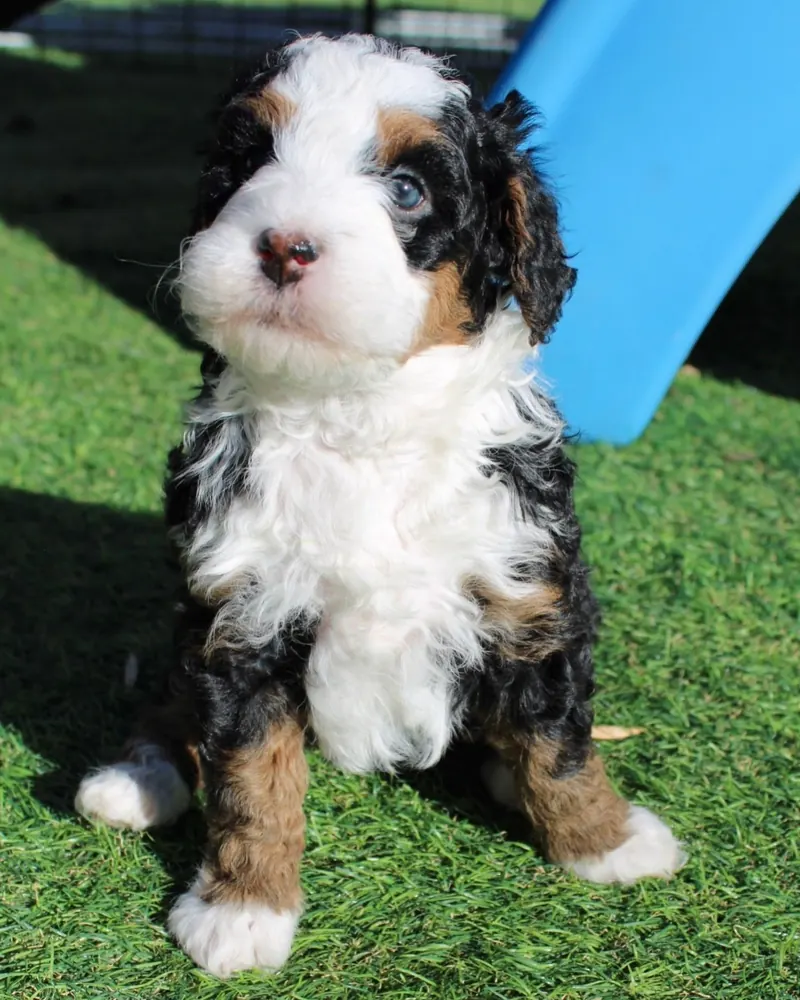
Yes. Tricolor is the best known, and black and white, sable, merle, chocolate and others show up too. Our Bernedoodle colors page shows them.
06Are Bernedoodles easy to train?
They are generally keen to learn, thanks to the Poodle side, and sociable like the Bernese. Short, consistent, reward-based sessions started early tend to work best.
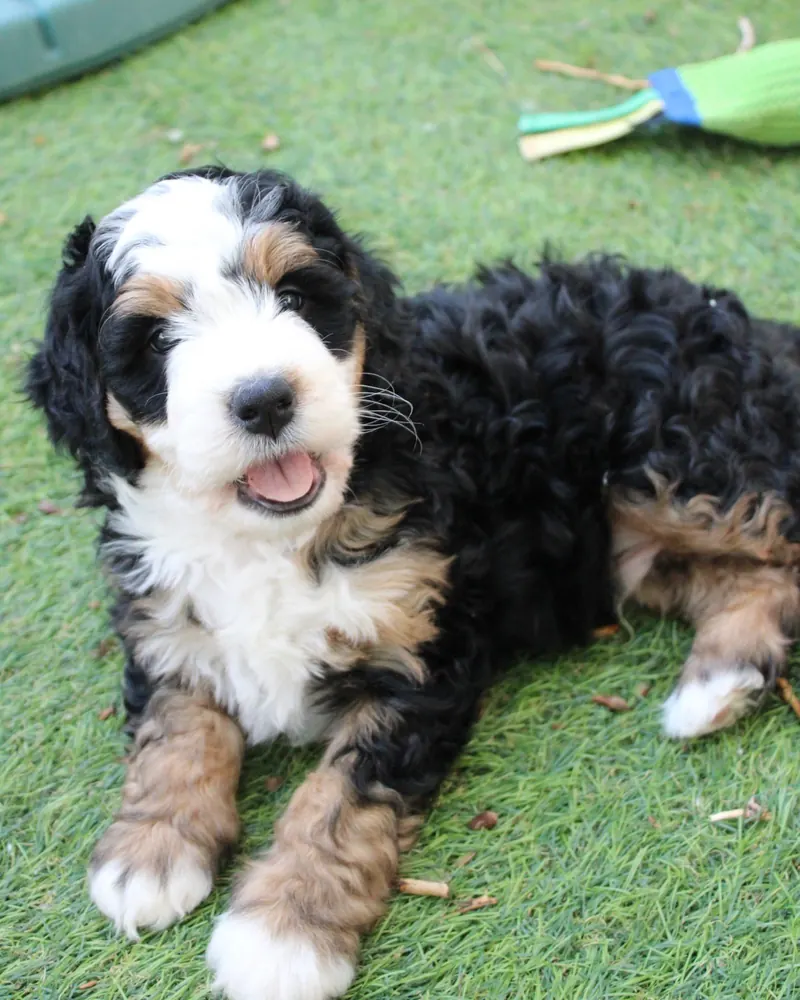
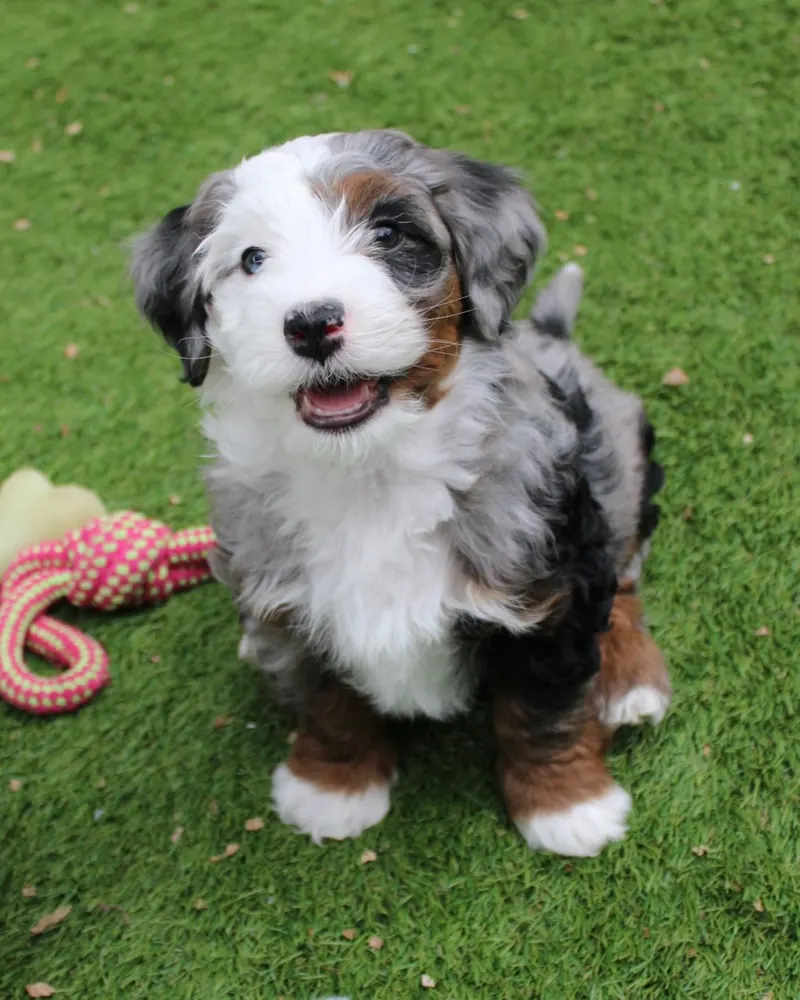
Bernedoodle Puppies Available Now
Keep Reading
How Big Do Bernedoodles Get? Full Grown Size and WeightA breeder's straight look at full grown Bernedoodle size: toy, mini and standard weights, a growth chart by age, and how...Read the guide
Bernedoodle Generations: F1, F1b, F2 and MultigenWe break down F1, F1b, F1bb, F2, F2b and multigen Bernedoodles: what each label really means, how it shapes coat and...Read the guide
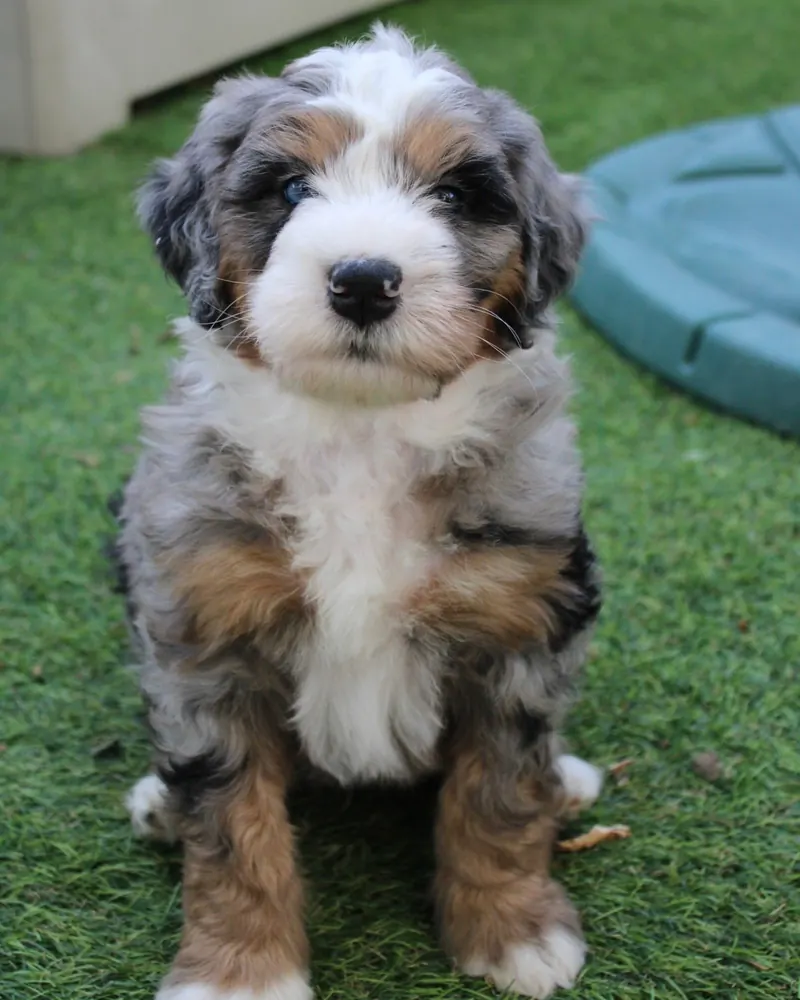 Bernedoodle Temperament and PersonalityWe raise Bernedoodles, so here is the honest version of the temperament: energy, brains, barking, training, kids, other...Read the guide
 Bernedoodle ColorsTri-color, merle and the restSee the colors
When You Are Ready
Thinking About a Bernedoodle Puppy?
See the puppies available now, or ask us anything about the breed.